Hotline: +381 61 63 84 071




Every woman has a story worth hearing: Meet Lola, Atina's cultural mediator
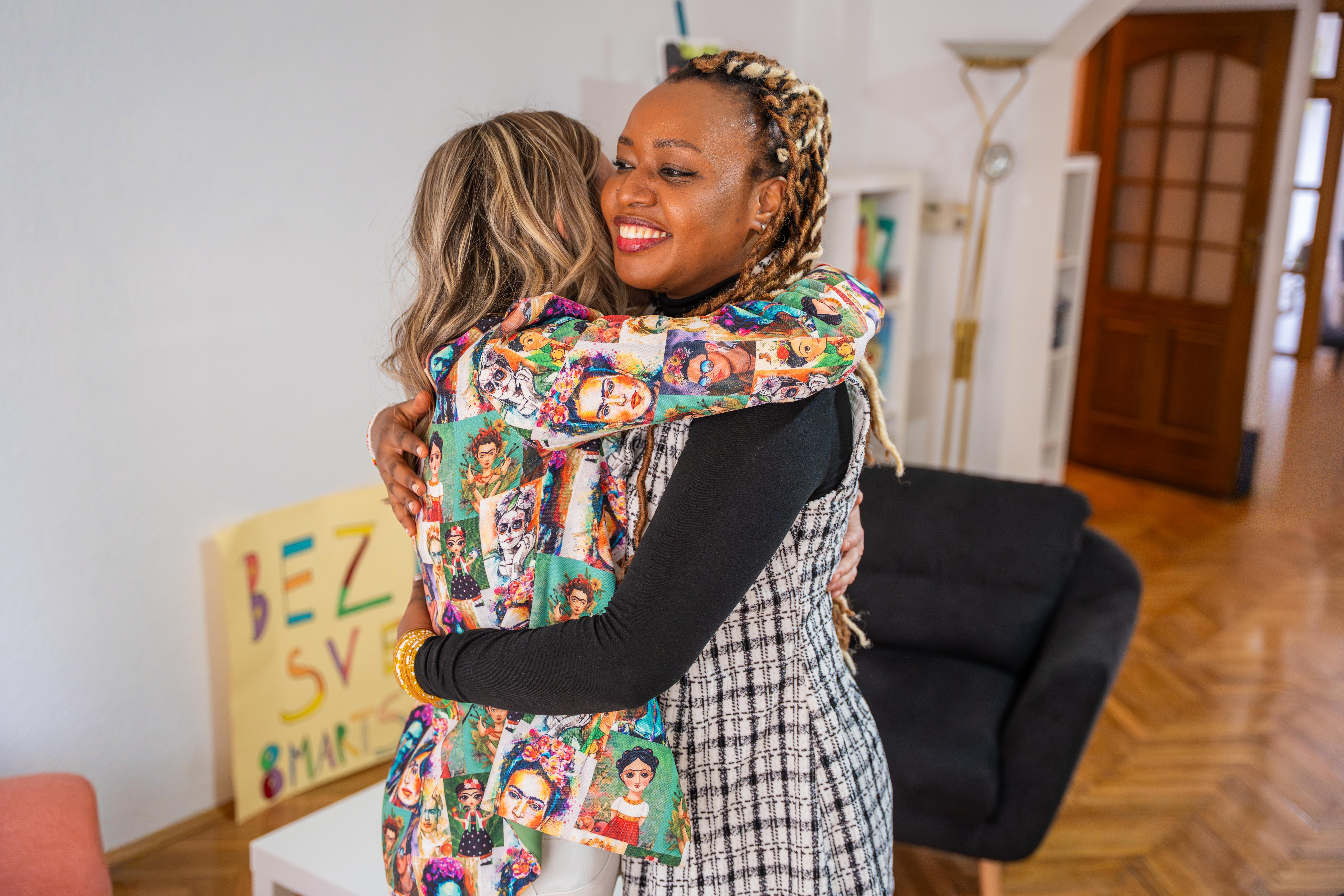
Every woman has a story worth hearing: Meet Lola, Atina's cultural mediator
Photo: Dragan Mujan
When Ingabire Lola Brigitte enters an asylum or reception center, she is not just another service provider walking through the door.
She is someone who understands.
She understands what it means to arrive in a new country carrying uncertainty, fear, and unanswered questions. She understands what it feels like to search for safety while navigating an unfamiliar language, culture, and system. Most importantly, she understands because she has lived parts of that journey herself.
Today, Lola works with Atina as a cultural mediator, supporting migrant and refugee women across Serbia. She facilitates workshops, provides information, listens to women's concerns, and helps bridge the gap between women on the move and the services available to them.
"I studied social work and community development," she explains. "Atina supported me to develop myself further. Now I have the chance to support other women."
Her work regularly takes her to asylum and reception centers, where she meets women from different countries, cultures, and backgrounds. While every story is unique, many of the challenges they face are remarkably similar.
"Women often struggle with language barriers, cultural differences, and a lack of financial and psychological support," Lola says.
When she first meets women, they are often reserved and cautious.
"At the beginning, many women are shy and keep to themselves. But after some time, they start opening up and sharing their experiences."
Building trust is at the heart of Lola's work. Lola believes that women are more likely to seek support when they can speak with someone who understands their language, culture, and experiences.
"People are often afraid of the unknown. We naturally gravitate toward what feels familiar and safe."
Through workshops and individual conversations, Lola helps women learn about their rights, available services, and ways to protect themselves from violence, exploitation, and trafficking. Discussions about culture, gender roles, and gender-based violence often generate the most engagement.
What surprises many women, she says, is not only the existence of their rights, but how little information they had received about them before.
"They often realize that nobody has ever explained these rights to them."
Yet information is only one part of the process.
Beyond knowledge, Lola sees women gaining something even more valuable: confidence.
"They gain self-confidence, strength, and courage to stand up for themselves."
Over time, she witnesses remarkable transformations.
When asked what empowerment looks like, her answer is simple:
"It looks like freedom and power."
Her outreach work also plays an important role in identifying women who may be at risk of violence, trafficking, or exploitation.
"People cannot ask for help from someone they do not know or have never seen. That is why outreach is so important."
She encourages women to be cautious of situations that seem too good to be true, particularly when looking for work opportunities or considering travel abroad.
"Isolation, missing information, pressure, or having someone take your travel documents are important warning signs."
One of the moments she remembers most is supporting a woman who had lost hope.
"Sometimes advice, counseling, or simply listening can give someone the strength and courage not to give up."
For Lola, the lessons learned through this work extend far beyond professional experience.
"Working with migrant and refugee women has taught me to be flexible, compassionate, understanding, a good listener, and helpful."
When she thinks about the future, what gives her hope is the possibility that women will carry forward what they have learned.
"I hope they will use this knowledge to protect themselves and build a better future."
And if she could share one message with migrant and refugee women everywhere, it would be this:
"Your life matters. Do not accept other people's limitations. You are capable of much more than you were taught to believe."
Perhaps that is also the best way to understand what empowerment means.
As Lola puts it:
"Empowerment is removing the veil from someone's eyes so they can see who they really are and what they are capable of achieving. I have seen it happen in the lives of women supported by Atina, and in my own life as well."
These actions and the article were supported by the project "Together for Her: Community-Based Protection and Empowerment - Comprehensive Support for Migrant and Refugee Women," implemented with support from Switzerland. The content is the sole responsibility of Atina and does not necessarily reflect the official views of Switzerland.


 FACEBOOK
 TWITTER
 YOUTUBE