Hotline: +381 61 63 84 071




Voices of trafficking survivors - key comments on the Draft Law on the suppression of human trafficking and the protection of victims
Comments by trafficking survivors on the Draft Law
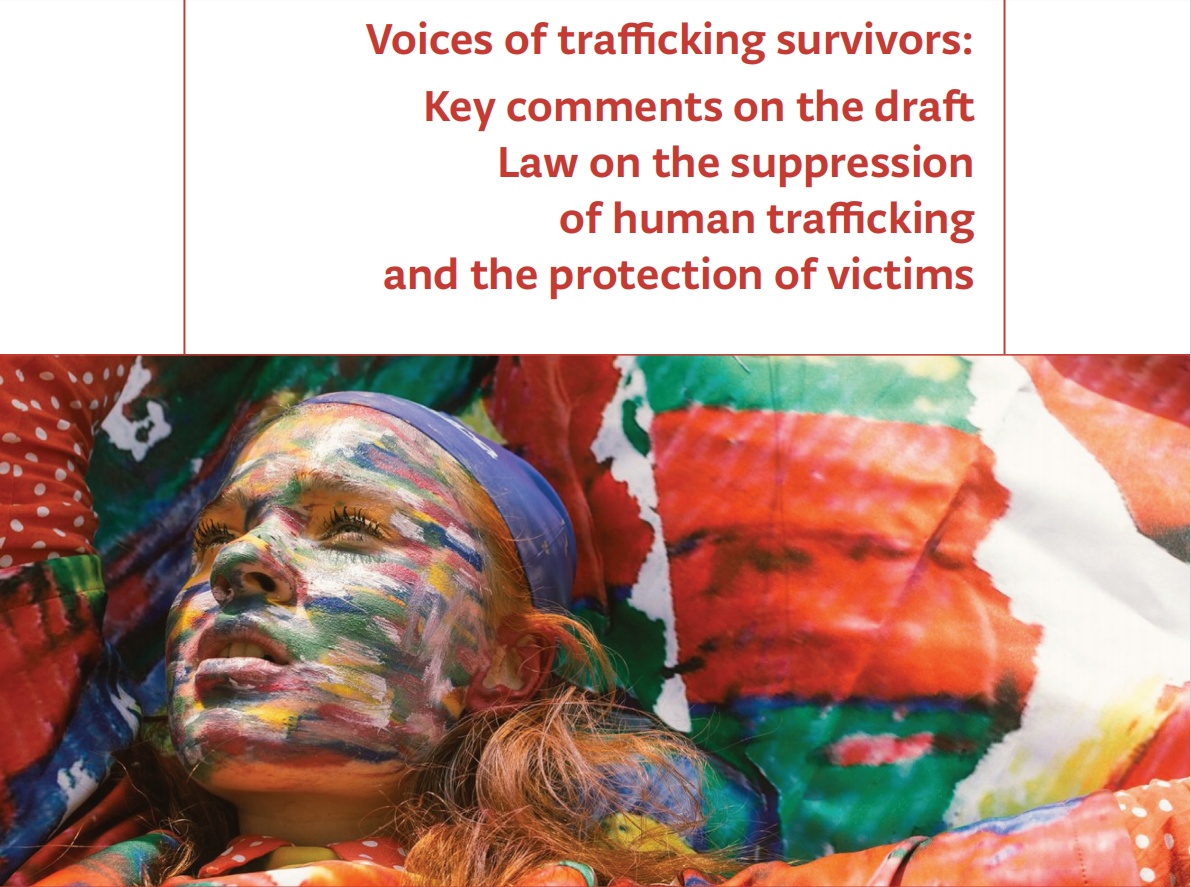
NGO Atina published the report “Voices of trafficking survivors - key comments on the Draft Law on the suppression of human trafficking and the protection of victims.”
In 2025, a Draft Law on the suppression of human trafficking and the protection of victims was prepared, within the framework of the Republic of Serbia’s Reform Agenda 2024-2027, with the expectation that the law would be adopted in 2026.
NGO Atina utilized this process to put at the center what is most often overlooked: how a law “works in real life” and whether it can respond to the actual needs of victims. On this occasion, Atina published the report Voices of trafficking survivors - key comments on the Draft Law on the suppression of human trafficking and the protection of victims. The report was authored by Radmila Dragičević Dičić and Jelena Hrnjak and published in January 2026 in Belgrade.
This initiative is part of Atina’s long-standing work to include women with lived experience of human trafficking in decision-making processes, from contributing to the development of minimum standards for supported housing (2009), to establishing Advocacy Groups of survivors (since 2018), and sustaining continuous dialogue with decision-makers.
For this purpose, Atina brought together nine participants, formally identified victims of human trafficking, through two focus groups: one with women from migrant communities and another with women from the local population. The discussions were not aimed at a legal-technical analysis of the text, but at understanding it through lived experience: whether the participants could recognize themselves in the draft, what seemed feasible and what was difficult to implement, and what was missing. The sessions were moderated by Radmila Dragičević Dičić, a retired judge, who helped create an atmosphere of trust and safety, without requiring the women to reopen traumatic details.
In both focus groups, participants expressed appreciation for being recognized as relevant interlocutors and showed a clear willingness to contribute to both the implementation and improvement of the law. At the same time, they spoke openly about their fear of a “law on paper” and the risk of multiple and repeated victimization in contact with institutions.
They particularly highlighted the rights they consider crucial for effective protection: the right to information, healthcare, and immediate psychological support; privacy and data protection; a recovery and reflection period; safety; compensation for harm suffered; and the identification procedure. They also specifically addressed the planned establishment of a Central Register, as envisaged by the Draft Law.
One of the most important messages is that implementation is directly tied to funding and capacity: participants clearly recognize that without budgets, staff, training, and oversight of enforcement, rights remain inaccessible. The conclusions further emphasize the state’s obligation to ensure stable funding for specialized services that have proven results and enjoy victims’ trust, so that the law can be applied in everyday practice.
Two strong messages run throughout the report. The first is that the right to information is the “key to all other rights.” Participants point out that information is often provided in fragments and only once, without checking understanding, an approach that can lead directly to further victimization. The second message is that victim identification must not be blocked by a consent requirement. Participants warn that many victims, at the moment of first contact, do not recognize themselves as victims; therefore, insisting on consent can become a barrier to protection. This is often linked to psychological state, denial, feelings of guilt, and an inability to fully grasp the consequences of a decision at that moment.
For the participants, it is important not to be seen only as “rights holders” or “service users,” but as agents of change: they propose establishing a Council of trafficking survivors and express readiness to take part in trainings and empowerment programmes for other victims.
The publication was produced within the project “Empower Her: Strengthening Pathways to Independence for Survivors,” supported by the Trag Foundation, with the note that the content is the sole responsibility of Atina Association and does not necessarily reflect the views of the Trag Foundation.




 FACEBOOK
 TWITTER
 YOUTUBE