Hotline: +381 61 63 84 071




Every contact is an opportunity to identify victims of human trafficking
Every contact is an opportunity to identify victims of human trafficking
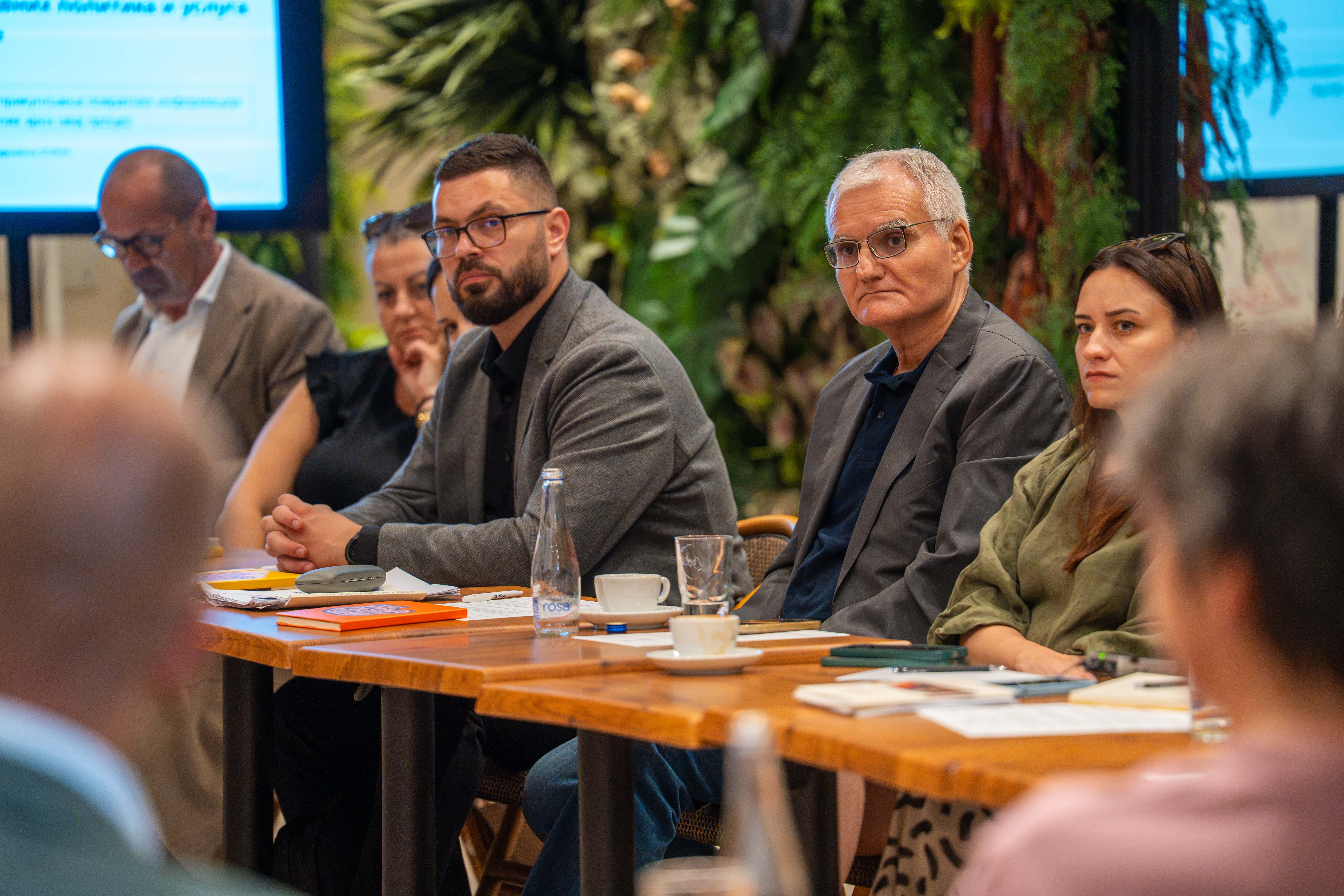
Photo made by Dragan Mujan
How can we ensure that people exposed to human trafficking and exploitation are identified in time, particularly those moving within mixed migration flows? How can the many interactions that institutions have with migrants, refugees and foreign workers every day become opportunities to recognize risks early and provide timely protection?
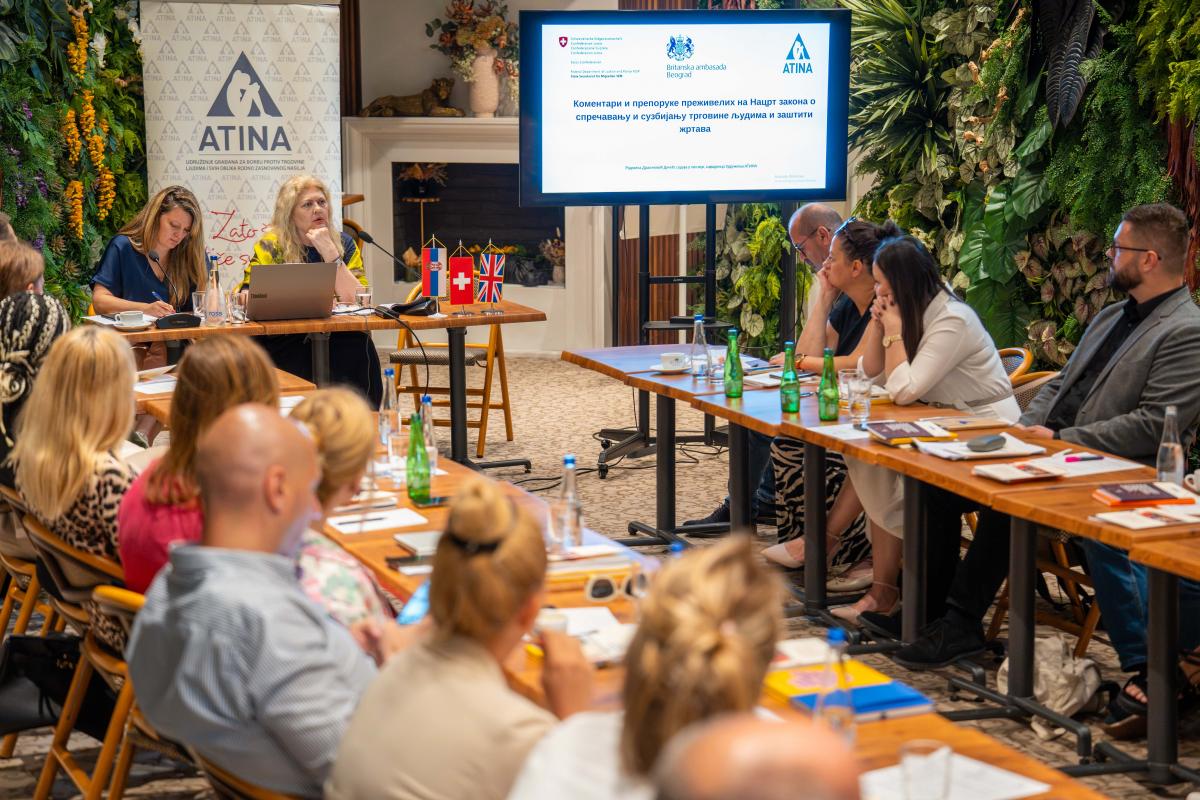
These were among the key questions discussed at the Ninth Community of Practice, organized by NGO Atina on 2 July 2026 in Belgrade, under the title “From recommendations to policies: towards the priorities of the new Action Plan to Combat Trafficking in Human Beings for 2027-2029.”
Mitar Đurašković, a retired police colonel and associate of NGO Atina, presented the analysis “Identification of victims of human trafficking in mixed migration flows in Serbia: challenges, risks and systemic gaps.” The analysis examines how different parts of the system come into contact with migrants, refugees and foreign workers, and the opportunities these interactions provide to identify people exposed to human trafficking at an early stage.
Based on available data for the period 2021-2025, the analysis examines the scale of mixed migration flows, interactions with vulnerable groups, professionals’ responsibilities to recognize potential victims, existing procedures, the number of referrals to the Centre for Human Trafficking Victims’ Protection, and the number of formally identified victims. It aimed to explore the gap between the system's many interactions with potentially vulnerable people and the much smaller number identified and referred to protection services.
Thousands of interactions with the system - opportunities for earlier identification
The analysis shows how many points of contact exist across the system and why these interactions can play a crucial role in early identification of exploitation.
Between 2021 and 2025, the police filed 99 criminal complaints related to human trafficking against 179 alleged perpetrators, involving 163 injured parties, including 10 foreign nationals. During the same period, police officers issued 8,986 registration certificates to people from Syria, Afghanistan, Pakistan, Bangladesh and other countries. Among them were 1,087 women and 1,479 minors, including 191 unaccompanied children.
Children on the move require particular attention. During the period under review, 26,203 children were accommodated in asylum and reception centres, while 8,119 unaccompanied minors were recorded. A further 369 unaccompanied minors were placed in social welfare institutions.
These figures do not mean that all these individuals were victims of human trafficking. However, they illustrate how many opportunities the system has to recognize indicators of exploitation among particularly vulnerable groups, assess risks, and refer people to appropriate protection services.
Particular attention to unaccompanied children and emerging forms of exploitation
The analysis also highlights changing exploitation patterns that require institutions to adapt their responses.
A particularly significant example comes from Bosnia and Herzegovina, where a final court judgment was issued in a human trafficking case involving underage migrants from Afghanistan, making it a unique case in the region. The case exposed a disturbing pattern in which migrant smugglers became human traffickers, while unaccompanied children were subjected to multiple forms of exploitation, including being forced to participate in the smuggling of other migrants, sexual exploitation, and exploitation for pornographic purposes. Some of the exploitation also occurred on Serbian territory.
This case demonstrates how human trafficking can be concealed within migrant smuggling networks. It also highlights the importance of identifying children forced to commit criminal offences as victims of human trafficking rather than treating them as perpetrators, while ensuring appropriate protection and cross-border cooperation.
NGO Atina's publication by Ahmed Mešić examines the case, the patterns of exploitation involved, and the challenges of identifying and protecting victims in greater detail: "Identification of victims of human trafficking in mixed migration flows".
Another important concern arises from the fact that criminal complaints for migrant smuggling were filed against eight male minors. However, the available data do not indicate whether any assessment was carried out to determine if they might themselves have been victims of human trafficking forced to commit criminal offences.
Such cases demonstrate the importance of early risk assessment and consistent application of the non-punishment principle for victims of human trafficking. People who commit certain acts as a direct consequence of exploitation should not be viewed solely as perpetrators; their potential need for protection must also be recognized.

Foreign workers - an important point of contact for early identification of exploitation
A separate section of the analysis focuses on foreign workers in Serbia.
Between 2021 and 2024, the Labour Inspectorate encountered 28,861 foreign nationals during inspections. Of these, 3,462 lacked work permits, while 1,661 worked informally, without an employment contract and/or registration for mandatory social insurance.
The Labour Inspectorate's findings also show that foreign nationals found working informally often do not enter into formal employment with their employers following an inspection. Instead, authorities return them to their countries of origin and replace them with other foreign workers.
These situations illustrate why institutional responses must go beyond simply identifying violations of labour rights. It is equally important to assess whether there are elements of deception, coercion, abuse of vulnerability or other forms of exploitation that may indicate human trafficking.
57 recommendations for 10 institutions
One key strength of the analysis is that it goes beyond identifying problems and offers concrete solutions. It sets out 57 recommendations for 10 institutions, some of which require no additional financial resources but rather better organization, coordination and monitoring of existing mechanisms.
The recommendations address different parts of the system, including the police, the Commissariat for Refugees and Migration, the social welfare and education systems, the Labour Inspectorate, the Centre for Human Trafficking Victims' Protection, the Protector of Citizens, the prosecution service and the judiciary.
Proposed measures include multilingual information on the rights of migrants and foreign workers; improved access to interpreters and cultural mediators; discreet, digital mechanisms for reporting violence and exploitation; better data collection and information sharing; and stronger outreach and multidisciplinary cooperation.

For the Labour Inspectorate, one proposal is to establish joint investigative teams comprising representatives of the police, prosecution service, Labour Inspectorate, Centre for Human Trafficking Victims' Protection and other relevant stakeholders. Based on available information and risk assessments, these teams could conduct targeted joint inspections and arrange immediate assistance and accommodation if they identify victims.
To improve identification among migrants and refugees, the analysis also recommends engaging culturally sensitive mediators and professionals with strong intercultural competencies, with particular attention to unaccompanied minors, especially boys.
Another recommendation is to establish an anonymized Early Warning System that allows information on emerging patterns of exploitation and profiles of identified victims to be used promptly to prevent further recruitment and improve the identification and protection of new victims.
What have we learned from previous Communities of Practice?
The second part of Mitar Đurašković's presentation focused on the conclusions and recommendations from previous Communities of Practice and their relevance to the future Action Plan.
Since 2022, Atina has developed and implemented the Community of Practice approach as a model that brings together institutions, civil society organizations, international organizations, professionals, and people with lived experience of exploitation and violence. Over nine meetings, this process has created a space where practical experience is transformed into knowledge, then into recommendations and concrete initiatives to improve legislation, policies, and practice.
Previous Communities of Practice have addressed a range of issues that remain relevant today: regional cooperation and information exchange, identification of victims among migrants, specialized training for police officers, prosecutors and other professionals, standard operating procedures, protection of foreign workers, regulation of recruitment and employment mediation, access to legal assistance and interpretation, and improved institutional coordination.
Protecting foreign workers has been a particularly important topic. At one of the previous Communities of Practice, the Centre for Human Trafficking Victims' Protection presented findings from interviews with more than 100 foreign workers who had not been identified as victims of human trafficking. Every person interviewed had experienced a violation of at least one labour right.
The Communities of Practice were therefore not conceived as a series of separate events, but as an ongoing process in which problems identified through individual cases and direct work are jointly examined and translated into proposals for systemic improvement.
From recommendations to the priorities of the new Action Plan
The Ninth Community of Practice provided an opportunity to connect the findings of the new analysis with the knowledge and recommendations developed during previous meetings, and to raise an important question: which of the lessons we have already learned should become part of the Action Plan to Combat Trafficking in Human Beings for 2027-2029?
The analysis shows that improving victim identification requires connecting existing points of contact across the system, strengthening information sharing, equipping professionals to recognize emerging patterns of exploitation, and ensuring that risk assessment becomes an integral part of institutional responses to particularly vulnerable groups.
One of the central messages of the analysis is that people exposed to human trafficking often already come into contact with institutions, whether through police and asylum procedures, reception centres, social welfare services or the labour market. Every such interaction is therefore an opportunity to recognize risks and ensure timely access to protection.
This is precisely where the new Action Plan offers an important opportunity: to translate existing recommendations, professional experience and research findings into clear institutional responsibilities, stronger cross-sector cooperation and concrete measures that will enable more victims to be identified in time and receive the support to which they are entitled.
*The Ninth Community of Practice was organized within the project “Together for her: community-based protection and empowerment - comprehensive support for migrant and refugee women in Serbia”, implemented with the support of Switzerland, and the project “Safety. Justice. Recovery. Support and empowerment of survivors of human trafficking and modern slavery in Serbia”, supported by the British Embassy in Belgrade.*



 FACEBOOK
 TWITTER
 YOUTUBE