Hotline: +381 61 63 84 071




Young people have a voice. Are we ready to listen? A workshop for young leaders in Novi Pazar
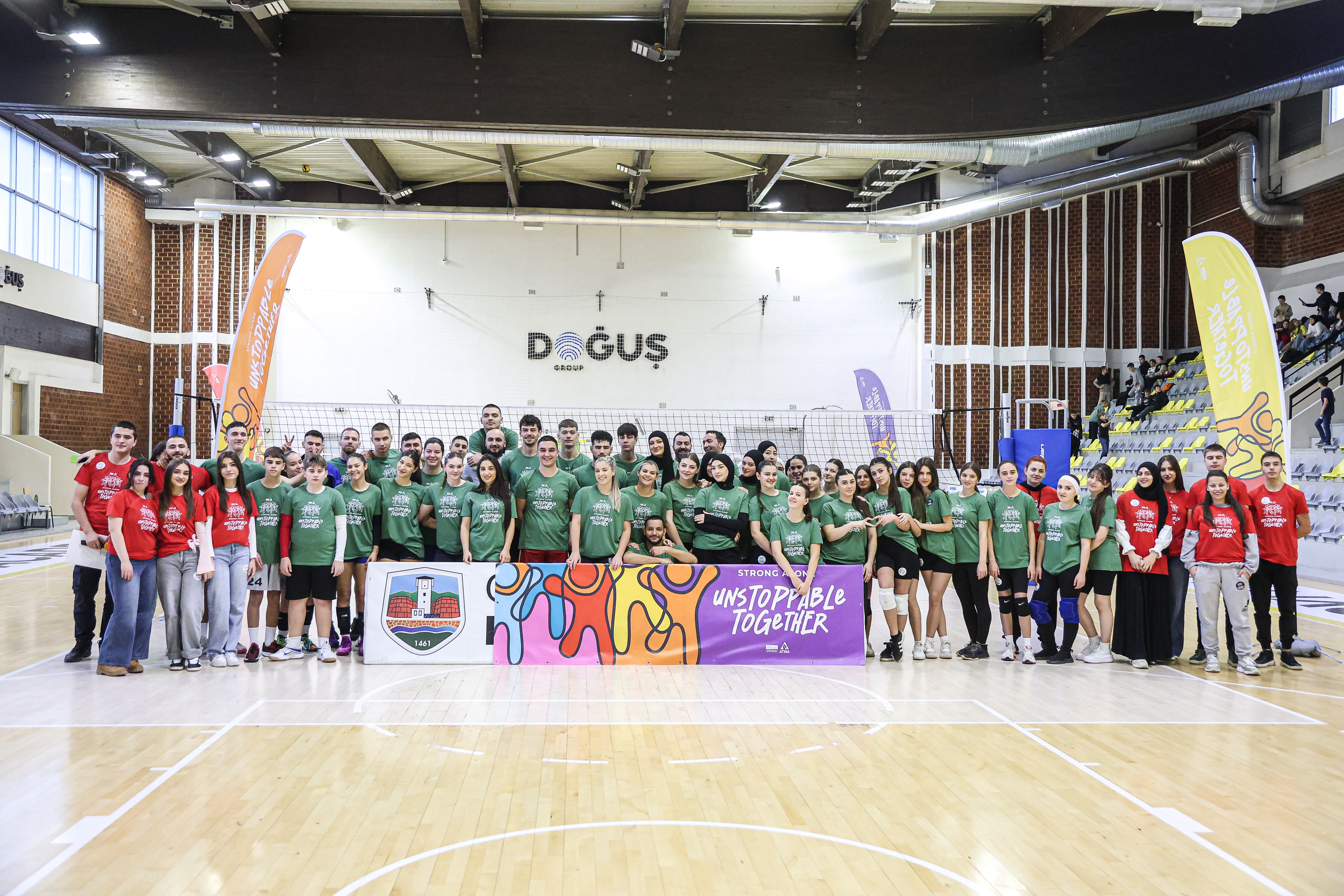
Photo: Seid Vejselović
Young people have a voice. Are we ready to listen? A workshop for young leaders in Novi Pazar
Who decides what matters to young people? How often do they get to speak about issues that directly affect them, and how often are decisions made without their participation? What changes when young people have space not only to express their opinions, but also to turn their ideas into concrete initiatives?
These questions were at the heart of a workshop for young leaders held in Novi Pazar in November 2025. The workshop brought together 15 young people ready to discuss social issues, challenge established attitudes and explore opportunities to bring about change in their communities.
The workshop was part of the project “Strong alone, unstoppable together - sport for social justice”, implemented by NGO Atina with support from the Swedish Postcode Lottery Foundation. Its aim was not only to help young people gain new knowledge about gender equality, discrimination, violence and human trafficking, but also to develop skills that would enable them to discuss these issues with their peers, recognize problems in their surroundings and participate in addressing them.
Leadership does not begin with being the loudest voice
When we think about young leaders, we often imagine confident individuals who are comfortable speaking in front of others and willing to take responsibility. However, leadership doesn't necessarily mean being the loudest person in the room, having an answer to every question, or making decisions on behalf of others.
Leadership can also mean listening, recognizing injustice, making space for different perspectives, and bringing people together around an idea that matters to the community.
This understanding of leadership was at the heart of the workshop in Novi Pazar.
Through discussions, group work and practical exercises, participants were not given ready-made answers. Instead, they explored situations from everyday life, questioned stereotypes and discussed how discrimination, gender inequality and different forms of violence affect young people's opportunities to develop, participate and feel accepted.
This approach rests on a simple but important principle: young people already have experiences, knowledge, and perspectives that deserve recognition and respect. Educational and youth programs should not tell them what to think, but create conditions where they can ask questions, think critically, exchange experiences, and reach their own conclusions.
Recognizing violence means understanding the conditions that enable it
A significant part of the workshop focused on gender equality, stereotypes, discrimination, gender-based violence and human trafficking.
Although these issues are often presented as separate social problems, they are closely interconnected. Stereotypes about how girls and boys should behave, expectations surrounding their roles, the normalization of controlling behavior in relationships, the exclusion of those who differ from the majority, and unequal access to opportunities can all contribute to environments in which discrimination and violence are more easily justified or silenced.
This is why conversations about prevention must go beyond simply identifying individual forms of violence.
We also need to discuss why certain behaviors are considered acceptable, why it can sometimes be difficult to challenge the group, how to recognize manipulation and abuses of trust, and what we can do when we see someone experiencing violence or discrimination.
During the workshop, young people used practical examples to explore how to recognize problems and consider possible ways of responding. These conversations are important precisely because violence prevention cannot rely solely on providing information about risks. It also requires developing critical thinking, mutual trust, an understanding of one's rights, and awareness of available support.
For Atina, young people mustn't be viewed merely as individuals who need protection from danger, but as equal participants in dialogue who can help create safer, more just environments.
From individual perspectives to collective initiatives
One of the workshop's central questions was how the issues young people discuss can become part of their everyday actions.
Recognizing a problem and wanting change are not always enough. It is also necessary to involve others, share ideas, reconcile different opinions, and give a collective initiative concrete form.
Participants discussed how to bring their peers together around a shared idea, take initiative, and launch activities that respond to their communities' needs.
This process involves learning about cooperation, communication, responsibility and collective decision-making. But it also raises a broader question: how much space do young people really have to influence life in their communities?
We often encourage young people to be active, responsible, and engaged in social issues, while failing to provide enough opportunities for them to participate in decision-making. Their ideas often remain mere suggestions, while others make the decisions.
Meaningful youth participation therefore involves more than simply asking young people for their opinions. It means ensuring their proposals are seriously considered, they have access to information and support, and they can help implement initiatives they identify as important.
Within the project “Strong alone, unstoppable together”, working with young leaders represents an investment in precisely these opportunities. The aim is for the knowledge and experiences gained during the workshops to extend beyond a single group, to be shared among peers and to provide a foundation for new activities in local communities.
“There is room for everyone on the sports field”
Sports activities were also an important part of the day, allowing young people to continue socializing, cooperating and getting to know one another beyond the workshop discussions.
Sport itself created an opportunity to consider some of the issues discussed during the workshop from a different perspective.
“Inclusion is simple - there is room for everyone on the sports field,” said Ensar, a workshop participant.
His message is simple, but it raises an important question: if we want everyone to have a place on the sports field, what do we need to do to ensure the same in schools, communities, and society?
Inclusion is not simply about being present. Allowing someone to participate is not enough if they also don't have the opportunity to be heard, accepted, and included on an equal footing.
In sport, as in everyday life, invisible barriers exist. Gender stereotypes can influence who is encouraged to take part in certain sports, prejudice can affect who is accepted into a team, and different socioeconomic circumstances can determine who has the opportunity to participate at all.
Sport therefore becomes a space for social change when we recognize these barriers and work to remove them.
Ensar's words remind us that belonging should not be a privilege reserved for those who find it easiest to fit in. It should mean making space for diversity, mutual respect and equal participation.
Young people are not only the future of their communities. They are an important part of them today.
When we talk about young people, we often emphasize that they are the future of society. Yet, however well-intentioned, this message can sometimes overshadow the fact that young people already have opinions, needs, rights, and the ability to influence the world around them.
We should not postpone their participation until they are older, have earned degrees, or hold formal decision-making positions.
They need spaces where they can develop their ideas, discuss social issues, connect with others and receive support to initiate changes they consider important.
The workshop in Novi Pazar was part of precisely such a process: one that brings together education, sport and active participation to create more opportunities for young people to shape their surroundings.
For Atina, this is also an important part of its long-term work to prevent violence, discrimination and human trafficking. Communities become safer not only when they can better recognize risks, but also when they create conditions where rights are respected, and diversity is valued. We hear the voices of those often excluded from decision-making.
Young people should not have to wait for someone to give them space one day. It is our responsibility to ensure that space is open to them today.
The workshop for young leaders in Novi Pazar was organized as part of the project “Strong alone, unstoppable together - sport for social justice”, implemented by NGO Atina with the support of the Swedish Postcode Lottery Foundation.*




 FACEBOOK
 TWITTER
 YOUTUBE