Hotline: +381 61 63 84 071




Brain, trauma, and recovery: How modern neuroscience is transforming support for women and children
Brain, trauma, and recovery: How modern neuroscience is transforming support for women and children
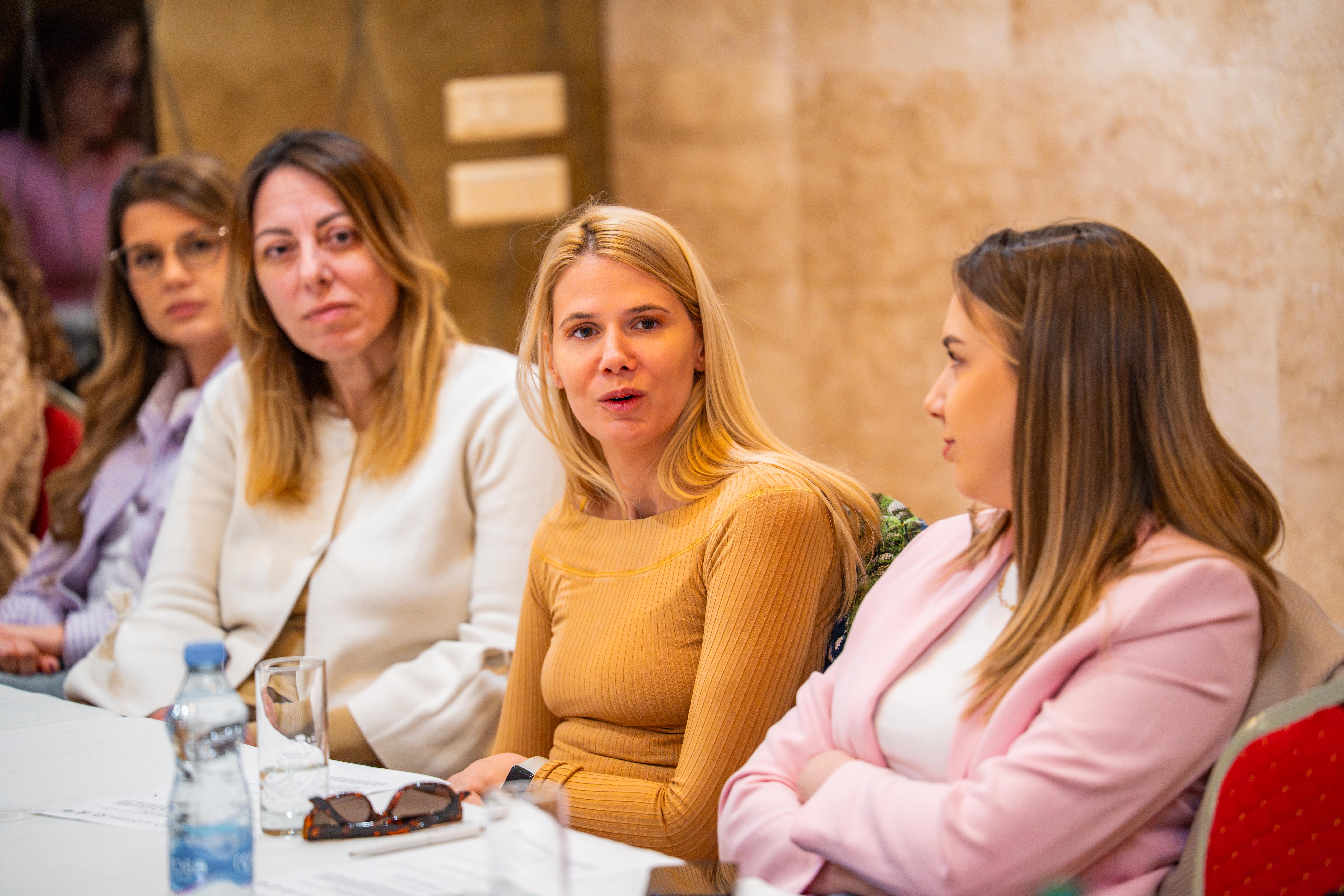
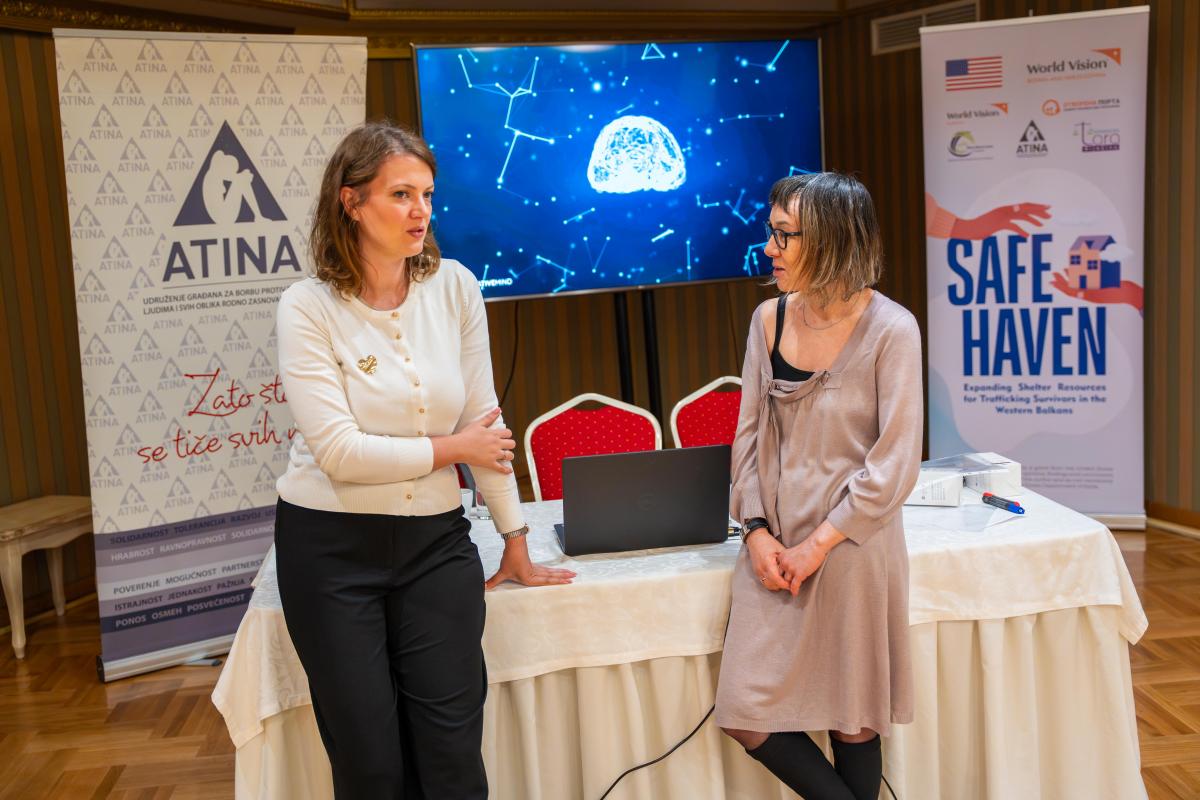
On 26–27 March 2026, NGO Atina organized a training in Belgrade, at Hotel Moskva, titled “Brain, Trauma and Recovery: Applying Neuroscience in Work with Victims of Gender-Based Violence.” The training was led by Dragana Ćuk Milankov, clinical psychologist, and Andrijana Radoičić Nedeljković, supervisor, psychotherapist, and social worker, both of whom have decades of experience in direct work with women who have survived human trafficking.
The training brought together 27 participants from the social protection system and civil society organizations who provide daily support to children and women with experiences of violence and trauma. Participants included professionals from the Center for the Protection of Infants, Children, and Youth, across various organizational units, including the Hotline Unit, residential care facilities “J. J. Zmaj,” “D. F. Jusa,” “Drinka Pavlović,” and “Moša Pijade,” as well as the Mother and Child Home, SOS hotline for women with experiences of violence, Emergency Shelter for Children and Youth, and Intensive Support Accommodation services. Professionals from the “Spomenak” Home for Children and Youth in Pančevo also participated, along with colleagues from NGO Atina.
Understanding trauma is not an addition to professional work; it is its foundation
Over the two-day training, participants deepened their understanding of trauma through contemporary neuroscience approaches, including the work of Gabor Maté, Bruce Perry’s Neurosequential Model, and Stephen Porges’ Polyvagal Theory. Particular emphasis was placed on understanding how trauma affects the nervous system and on linking these insights to everyday professional practice. This is especially important given that traumatic experiences do not remain only at the level of memory; they are “held” in the body and shape reactions and behavior.
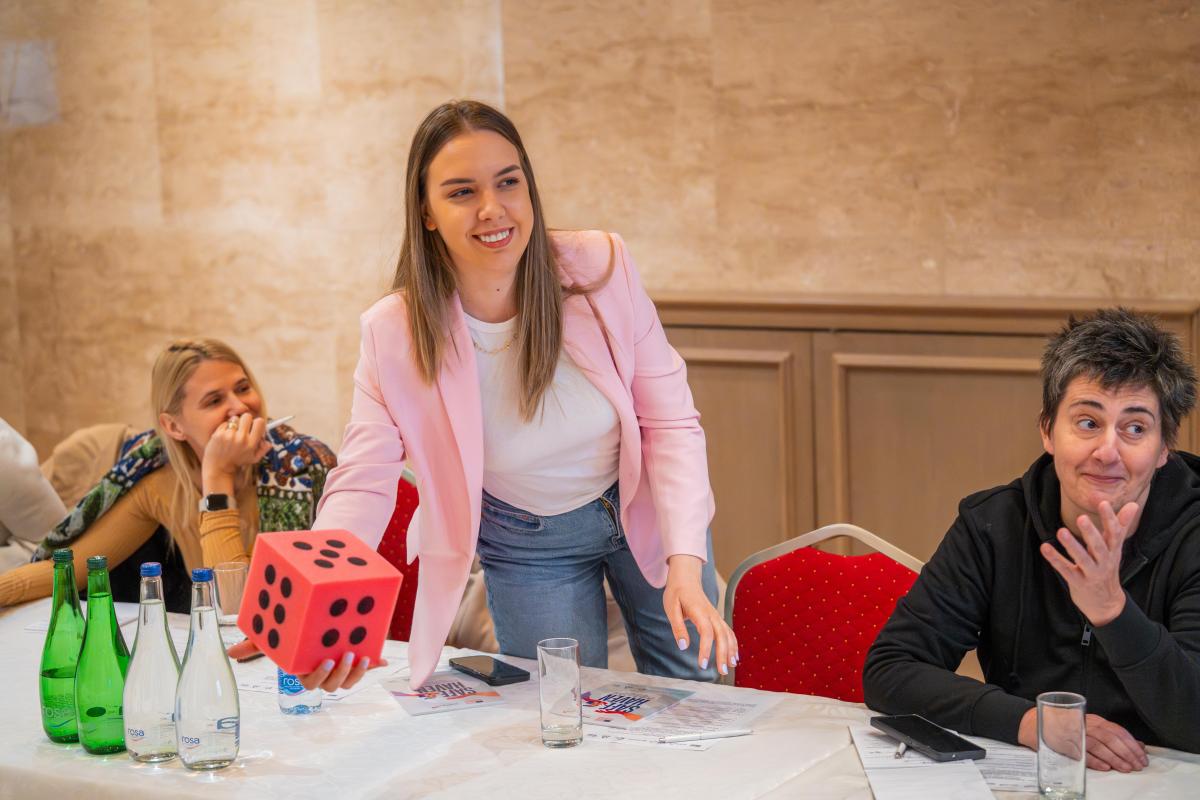
The first day of the training focused on the theoretical framework and the physiology of trauma, while the second day was dedicated to practical application, addressing real-life challenges participants face in their daily work. Through group work and exchange of experiences, participants collaboratively developed possible approaches and interventions for situations that often lack clear solutions.
A state of survival can become a new “normal” in the absence of continuous support and a sense of safety. Without safety, the nervous system remains in survival mode, and no intervention can achieve its full effect.
A particular value of the training was the open space for sharing experiences, where participants discussed challenges such as working with children who exhibit self-harm or aggressive behavior, the emotional demands of the work, and the risk of burnout, as well as the complexity of collaborating with families and the broader system. In this context, it was emphasized that prolonged exposure to stress and insecurity can lead to a constant state of alertness, with survival becoming a daily reality, further complicating recovery in the absence of sustained support and a sense of safety.
For Atina, such programs represent an essential part of ongoing efforts to improve the quality of support provided to women and children who have survived violence. Without understanding how trauma shapes behavior, support remains superficial and often insufficient.
Recovery does not begin in isolation; it begins in relationship, through safety and trust.
Because without understanding trauma, there is no meaningful support.
This training is part of the regional project “Safe Haven Developing Resources for Accommodation Services for Victims of Human Trafficking in the Western Balkans,” implemented by NGO Atina in cooperation with regional partner organizations, with the support of World Vision International and the U.S. Department of State.




 FACEBOOK
 TWITTER
 YOUTUBE