Hotline: +381 61 63 84 071




Working with trauma is not a procedure: Training held in Belgrade that is changing how we understand violence
Working with trauma is not a procedure: Training held in Belgrade that is changing how we understand violence
Photos: Dragan Mujan
What does it mean to work with a person who has survived violence, not only through procedures, but through understanding what is happening in their body, brain, and everyday functioning?
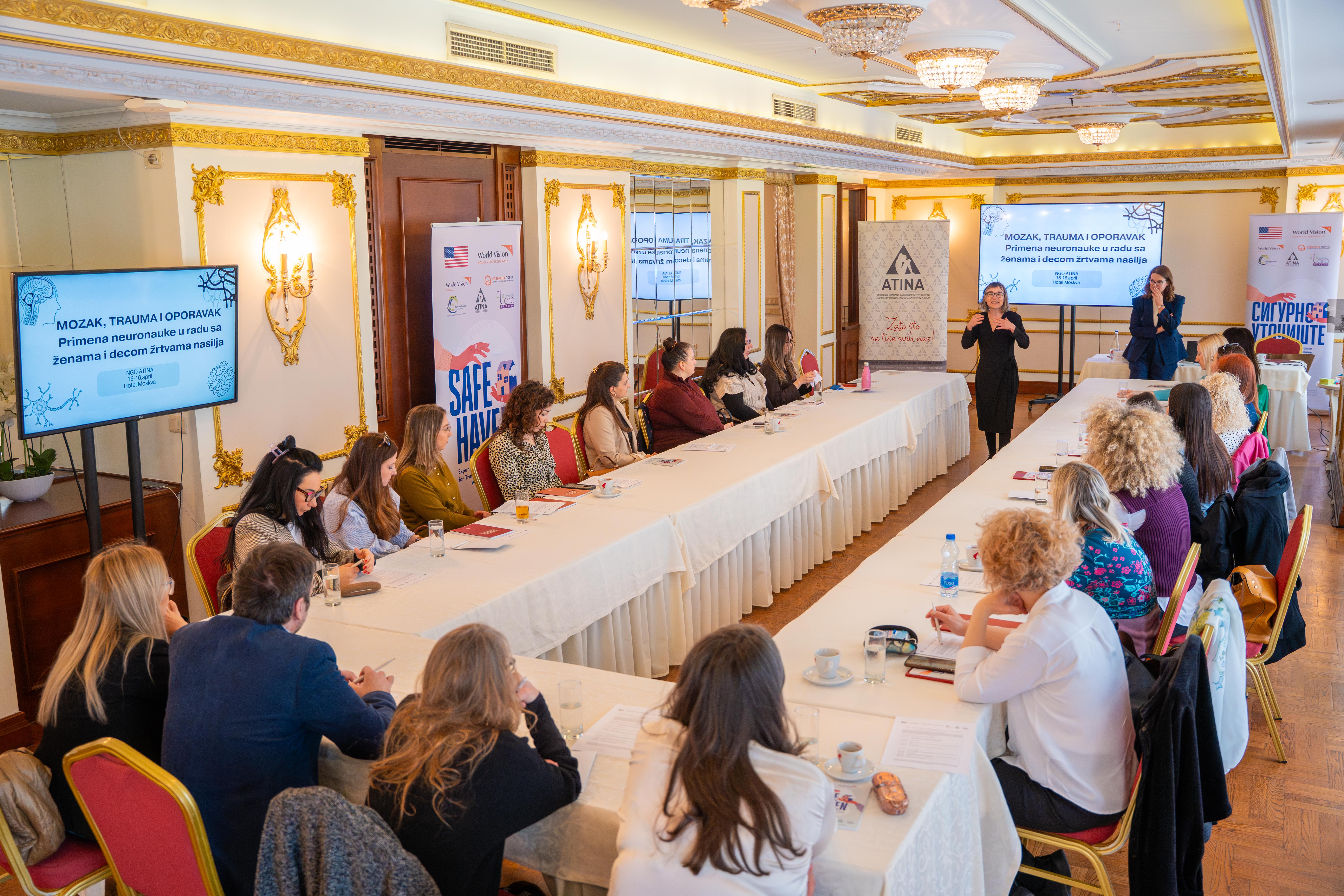
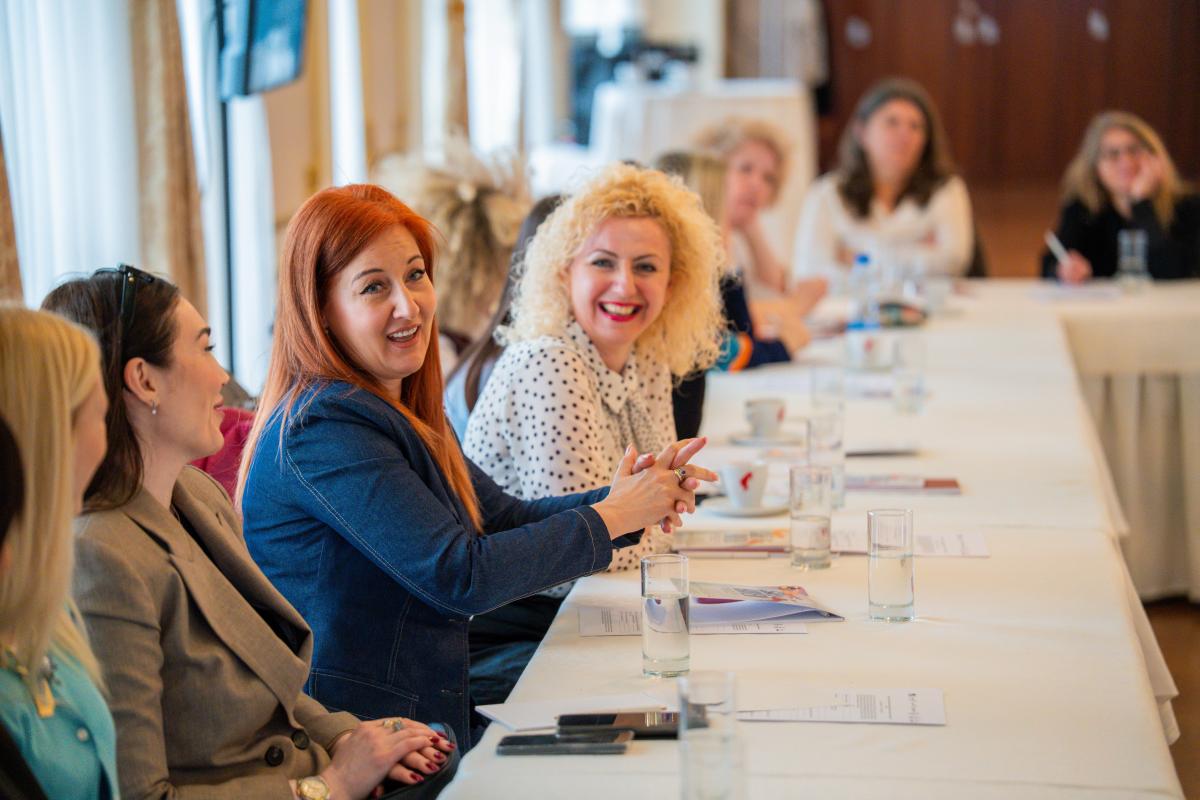
This question was at the core of the training “Brain, Trauma and Recovery: Applying Contemporary Neuroscience in Work with Women and Children Survivors of Violence”, organized by NGO Atina on April 15-16, 2026, in Belgrade, at Hotel Moskva. The training was led by Andrijana Radoičić Nedeljković and Dragana Ćuk Milankov, experts with extensive experience in direct work with victims of human trafficking and in developing trauma-informed approaches in practice.
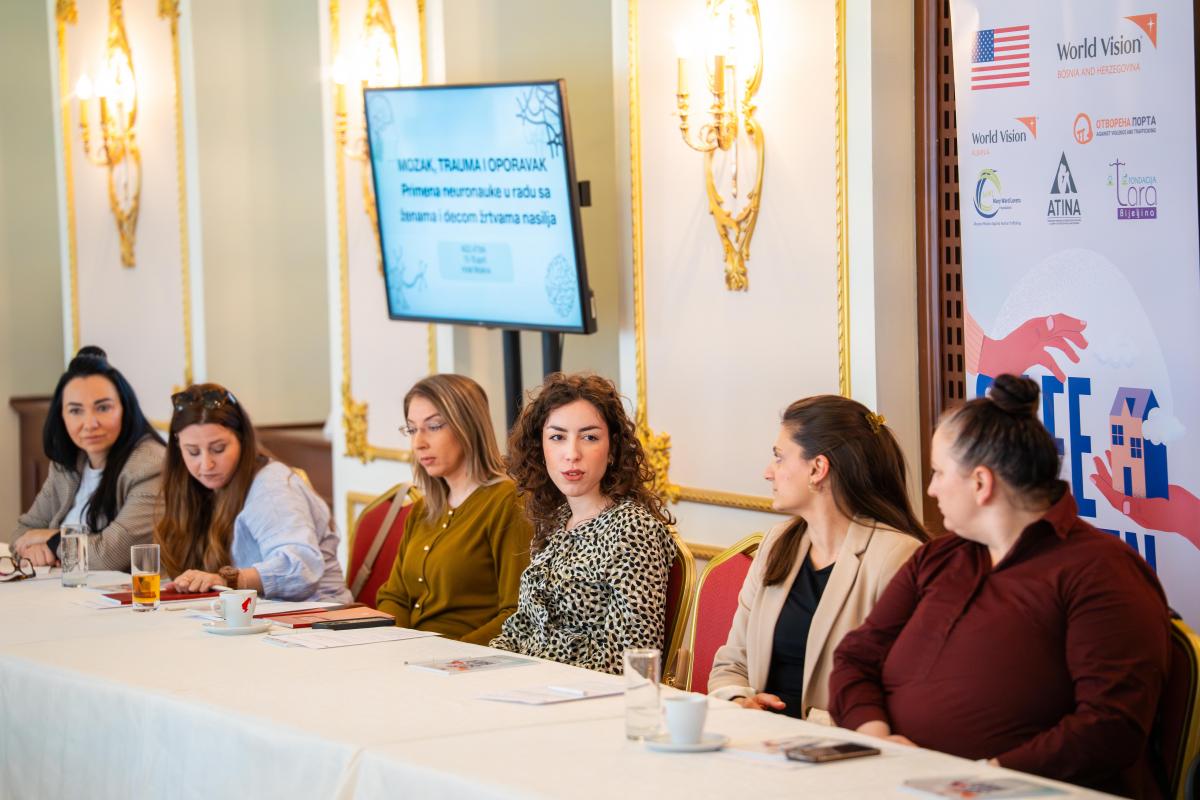
The training brought together 24 professionals from different support systems: 10 from Centers for Social Work (Palilula, Novi Beograd, Čukarica, Zemun, and Zvezdara), 4 from Family Counseling Services, 3 from safe houses in Pančevo and Belgrade, 3 from the Institute for Education of Children and Youth, and 2 participants each from the Shelter for Children and the Mother and Child Home. Over two days, participants connected theoretical knowledge with practical experience, exchanging insights and approaches for addressing everyday challenges in working with survivors of violence.
This was not just another theoretical training. It was a space where experience, science, and the reality of the system came together.
Participants spoke about real-life situations from practice, suicide attempts, self-harm, running away from institutions, working under pressure, and with limited resources. These situations were then examined through the lens of contemporary neuroscience: how trauma changes the brain, why reactions are often not rational, and what it means when the body “takes over.”
Out of every 100 adults in Serbia, around 70 have experienced some form of trauma in childhood, while around 20 have experienced four or more such experiences, data that clearly illustrate the scale of the issue the system faces on a daily basis.
Particular emphasis was placed on understanding that trauma is not only a psychological experience, but also a physiological event that affects the functioning of the entire organism.
Through the work of authors such as Gabor Maté and Bruce Perry, as well as the application of polyvagal theory, participants gained a different framework for understanding the behavior of people who have experienced violence.
Within this framework, special attention was given to the role of the autonomic nervous system and the process of “neuroception,” the body’s ability to detect safety or danger, often without conscious awareness.
A key component of the training consisted of experiential exercises. Participants had the opportunity to understand stress and regulation through their own experience and to develop practical tools applicable in their daily work. This part of the training was assessed as one of the most valuable.
An important insight was that recovery does not rely on isolated self-care, but on gradual regulation through relationships and a sense of safety in connection with others.
Group work further created space for exchange between different parts of the system. Although participants came from diverse professional backgrounds, a shared conclusion emerged: the challenges are not due to a lack of commitment, but to limited resources, time, and support for professionals themselves.
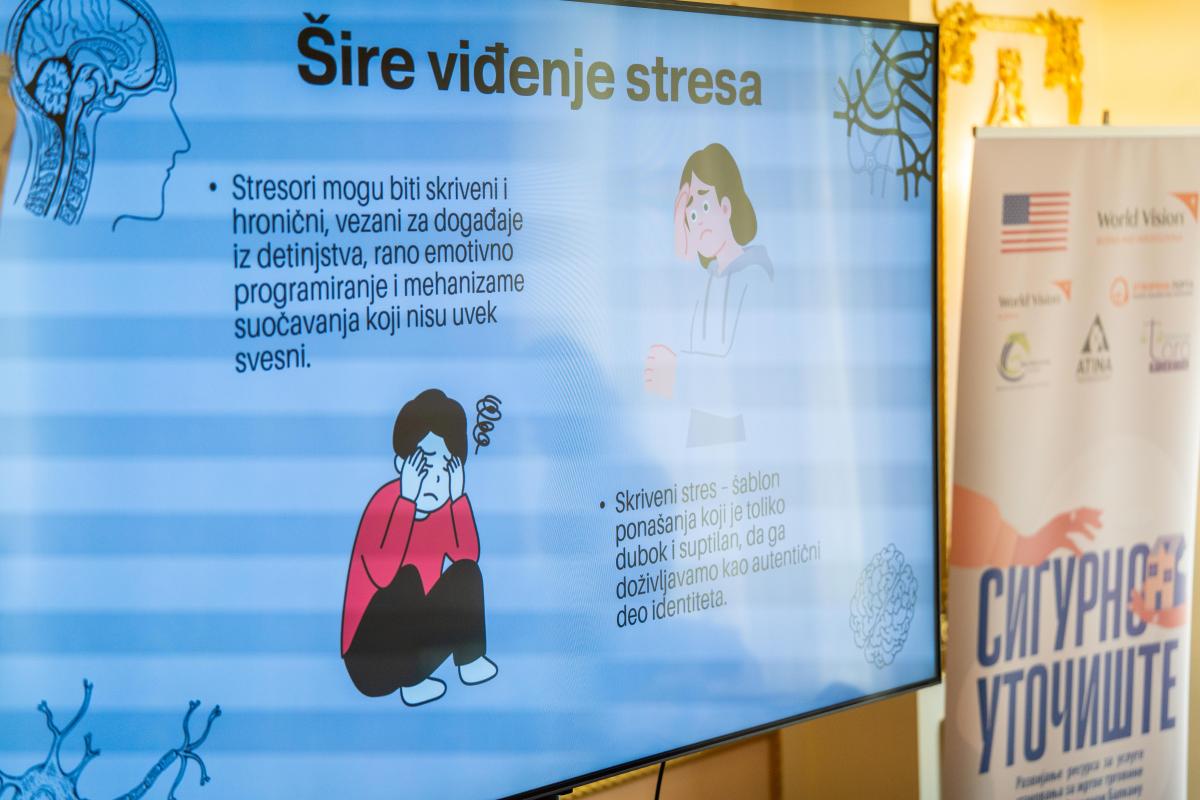
The evaluation of the training showed a high level of participant satisfaction, but also a clear need for continued work in this area, through advanced trainings, more space for exchange, and strengthening the practical application of acquired knowledge.
This training is part of Atina’s ongoing efforts to strengthen trauma-informed approaches and build the capacities of professionals working with survivors of violence. Because support for victims of violence cannot be merely formal, it must be grounded in understanding, continuity, and the real conditions in which it is provided.
This training is part of the regional project “Safe Haven Developing Resources for Accommodation Services for Victims of Human Trafficking in the Western Balkans,” implemented by NGO Atina in cooperation with regional partner organizations, with the support of World Vision International and the U.S. Department of State.




 FACEBOOK
 TWITTER
 YOUTUBE