Hotline: +381 61 63 84 071




Marijana Savić and NGO Atina among the stories of 25 activists changing the world
Marijana Savić and NGO Atina among the stories of 25 activists changing the world
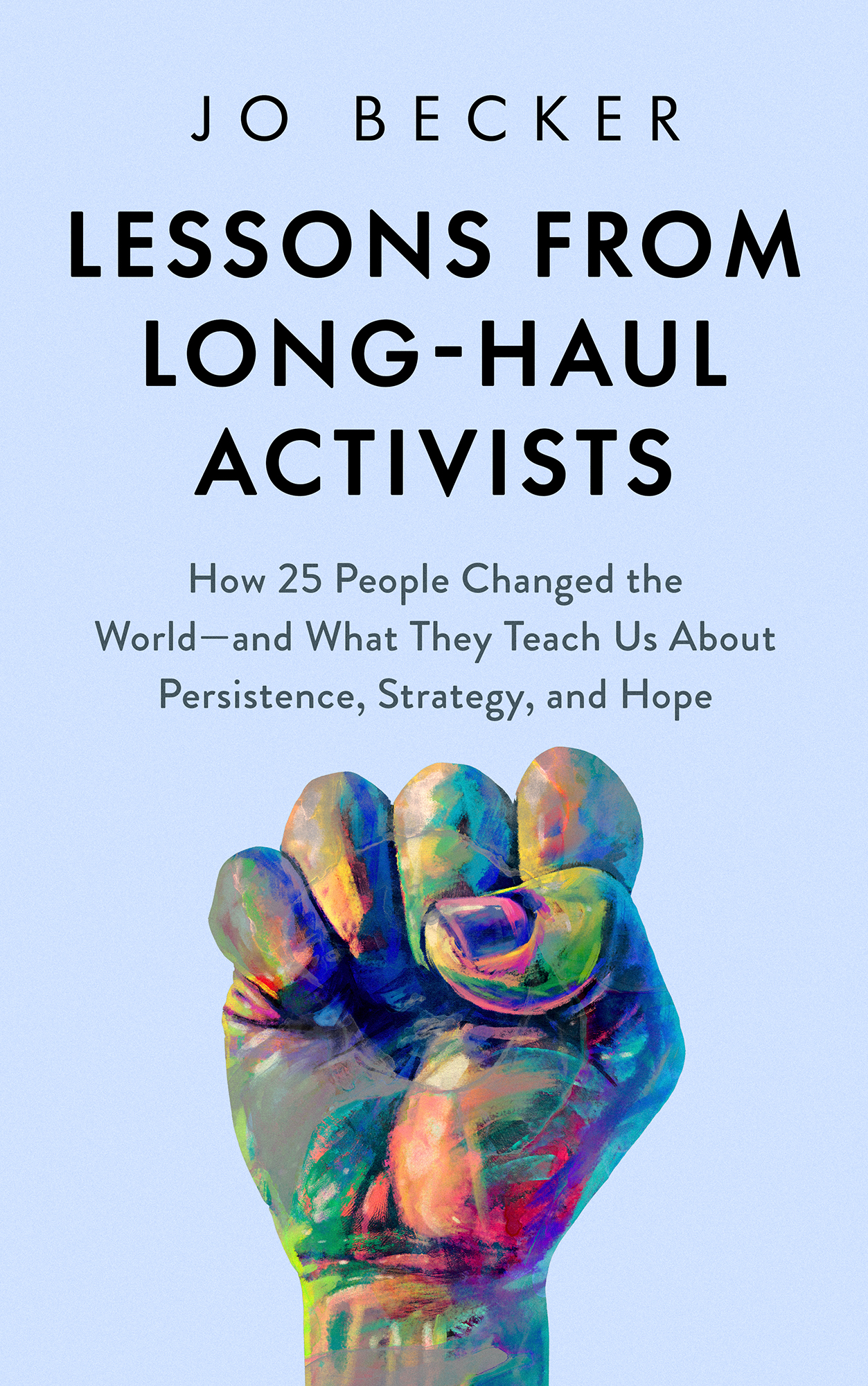
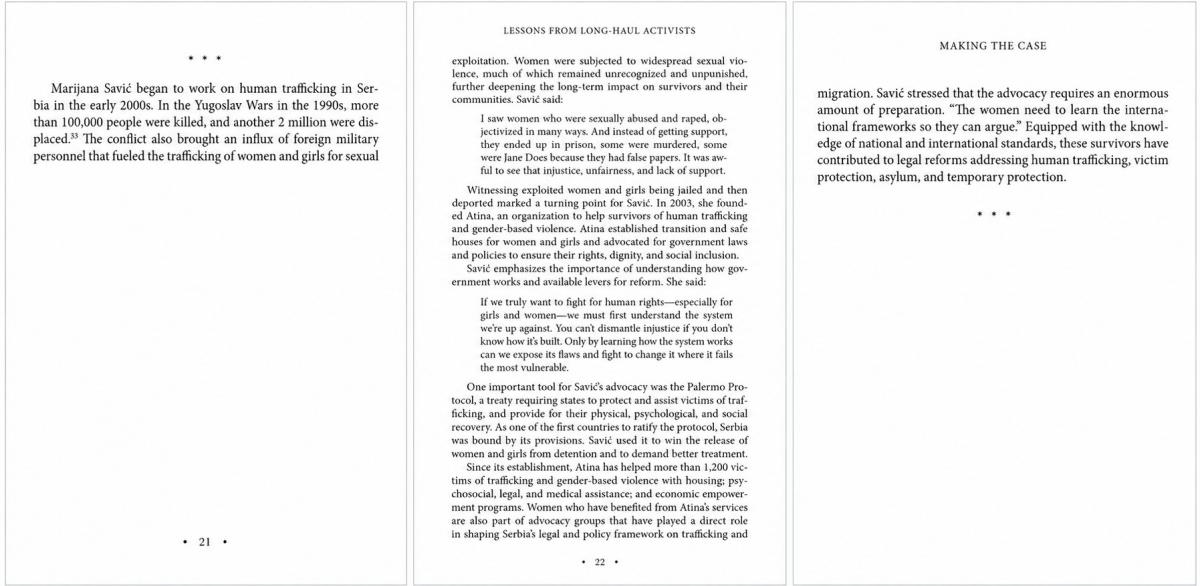
Marijana Savić, founder and director of NGO Atina, is one of 25 long-haul activists from around the world whose experiences are featured in Jo Becker’s new book, Lessons from long-haul activists: How 25 people changed the world - and what they teach us about persistence, strategy, and hope.
The book explores a subject that perhaps does not receive enough attention: what it takes to remain committed to the struggle for human rights for years and decades. It is not only about how change is achieved, but how activists persevere when change comes slowly; what they learn from failure; how they adapt their strategies; how they remain connected to the people whose rights they fight for; how they care for one another; and how, despite everything, they continue to believe that change is possible.
In this context, Marijana Savić’s story is also the story of more than two decades of Atina’s work.
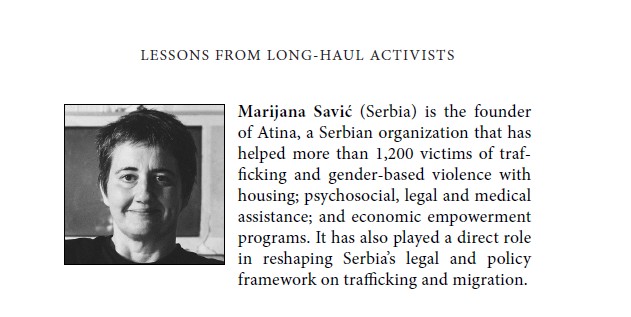
Jo Becker writes about Atina’s beginnings in 2003, when women and girls who had survived human trafficking, instead of receiving support and protection, often ended up in detention and were deported. Witnessing this injustice helped shape Atina to provide direct support to women while also working to change the system that failed them.
One of Marijana Savić’s central messages in the book is precisely about understanding the system as a prerequisite for changing it:
“If we truly want to fight for human rights, especially for girls and women, we must first understand the system we’re up against. You can’t dismantle injustice if you don’t know how it’s built. Only by learning how the system works can we expose its flaws and fight to change it where it fails the most vulnerable.”
This idea has shaped Atina’s work from the very beginning. Direct support to women has never been separated from the struggle to change laws, policies, and institutional practices. The experiences of women who have survived human trafficking have become a source of knowledge for developing proposals for systemic change. In contrast,e the women themselves participate in advocacy processes and contribute to reforms in the areas of human trafficking, victim protection, asylum, and temporary protection.
The book also speaks about another principle deeply embedded in Atina’s work: change is not something to wait for; it is something we must create and persistently fight for.
Reflecting on establishing the women’s social enterprise Bagel Bejgl at a time when Serbia had no adequate legal framework for social entrepreneurship, Marijana speaks about the need for activists to create space for change themselves when institutions cannot or will not move quickly enough. “Never say never” is one of the lessons Marijana highlights: believing change is possible is not simply part of activism; it drives us to persevere in the struggle.
The question of persistence holds a particularly important place in the book.
Marijana describes the first five years of Atina’s work as the most difficult, a period when you give everything you can, yet still do not know whether your work is truly making a difference. Years later, she sees the answer in the lives of women who return to Atina’s Reintegration Center and talk about where they are today, the strength they have regained, and the changes they have made. These changes remind us that the struggle for women’s rights is not abstract: we can see its impact in real lives and in women’s ability to regain control over them.
Lessons from long-haul activists: How 25 people changed the world, and what they teach us about persistence, strategy, and hope, is therefore not simply a book about activists’ successes. It also speaks to doubt, failure, risk, exhaustion, learning, community, and the persistence required for change to last.
For Atina, it is particularly meaningful that our organization's experience and Marijana Savić's are included among the stories of people worldwide who have dedicated their lives to human rights and social justice. The book recognizes something we have been learning for more than twenty years alongside the women we support: systemic change rarely comes quickly, but that is no reason to give up.
Quite the opposite.
We need to understand the system well enough to know where it must change, and stay in the struggle long enough to make that change possible.
Jo Becker’s Lessons from long-haul activists: How 25 people changed the world, and what they teach us about persistence, strategy, and hope is available here: Lessons from Long-Haul Activists: How 25 People Changed the World—and What They Teach Us About Persistence, Strategy, and Hope - Kindle edition by Becker, Jo. Politics & Social Sciences Kindle eBooks @ Amazon.com.



 FACEBOOK
 TWITTER
 YOUTUBE