Hotline: +381 61 63 84 071





Anu Juvonen visits NGO Atina: experiences from the field and challenges in protecting victims of human trafficking
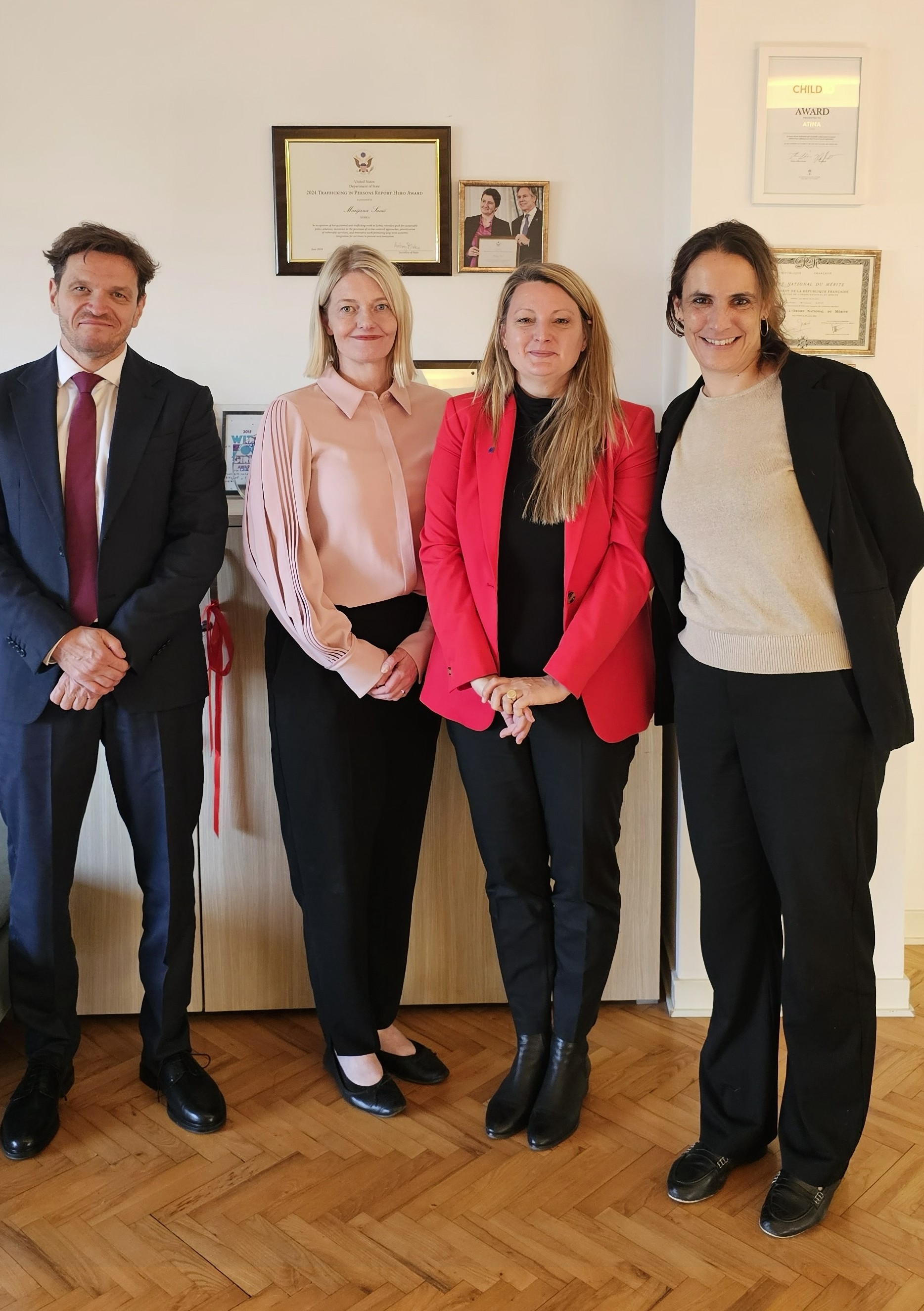
Anu Juvonen visits NGO Atina: experiences from the field and challenges in protecting victims of human trafficking.
On 21 September, NGO Atina welcomed Anu Juvonen, OSCE Special Representative for Civil Society, during her visit to Serbia as part of the Swiss OSCE Chairpersonship. The meeting provided an opportunity to examine, from the perspective of civil society organizations, the position and protection of victims of human trafficking, challenges within the identification and support system, as well as changes in migration flows and migration patterns in Serbia, particularly in the context of labor migration, exploitation and human trafficking.
During her conversation with Jelena Hrnjak from NGO Atina, Anu Juvonen showed particular interest in the organization’s experience in working directly with victims of human trafficking and the services available to them - from detection and identification to safe accommodation, legal and psychosocial support, long-term recovery and social inclusion. The discussion also addressed the barriers victims face in exercising their rights, as well as the challenges organizations face when cooperating with different institutions and systems.
The discussion also covered changes in migration flows and migration patterns in Serbia. Alongside migrants who see Serbia as one of the countries along their migration route, a growing number of foreign nationals have come to Serbia in recent years for employment. Atina’s direct work experience points to the risks of labor exploitation faced by foreign workers. Confiscation of passports, violence, non-payment of wages, and inadequate living and working conditions are among the problems Atina identifies through its fieldwork. Their position and working conditions raise questions about the timely recognition of indicators of exploitation, oversight of working conditions, the responsibility of employers and recruitment agencies, and the response of competent institutions when rights violations or exploitation are suspected. Through its work, Atina identifies cases of potential exploitation and reports them to competent institutions, but practice shows that the path from the first indicators of exploitation to identifying a victim and securing an appropriate institutional response is often long and complex.
An important topic of the discussion was the identification of victims of human trafficking and the importance of the “social pathway to identification”, particularly in light of the new Law on the Prevention and Suppression of Human Trafficking and the Protection of Victims of Human Trafficking, which will begin to apply on 1 January 2027. It was emphasised how important it is for victims’ protection and support needs to be recognised independently of criminal proceedings, and for the exercise of their rights and access to services not to depend on the outcome of those proceedings.
At the same time, attention was drawn to one of the long-standing challenges within the protection system - the lack of funding for specialised services for victims of human trafficking provided by licensed civil society service providers. Although NGO Atina is a licensed provider of supported housing services for victims of human trafficking, it receives no funding from the budget of the Republic of Serbia for the provision of this service. Legally guaranteed rights and protection standards must be matched by secure, sustainable funding for services in practice, so victims can access continuous support when they need it.
Experiences from cases involving the sexual exploitation of migrants were also exchanged, particularly in situations requiring cooperation between institutions and organisations from several countries. These cases further highlight the importance of regional cooperation and functional referral mechanisms to ensure victims receive continuous protection and support, regardless of where the exploitation began, where it was identified, or where the victim is currently located.
The discussion also addressed the importance of regular data collection and data availability. For organisations working directly with victims of human trafficking, migrants and other groups at risk of exploitation, timely and reliable data are essential for understanding changes in migration flows, identifying needs and risks, planning services, and responding appropriately to changes on the ground. A lack of accessible, up-to-date data makes it harder to understand the scale of specific problems and plan an appropriate response.
The meeting also highlighted the importance of the experience of civil society organisations that are in direct contact with victims of human trafficking and people at risk of exploitation. Experience gained through direct work makes it possible to identify emerging patterns of exploitation promptly, recognize barriers to accessing rights and services, and point to areas of the protection system that need improvement.
Anu Juvonen is the OSCE Special Representative for Civil Society, Executive Director of Demo Finland - Political Parties of Finland for Democracy, and Chair of the European Partnership for Democracy. From 2021 to 2024, she worked as a policy adviser at the Council of Europe, focusing on democracy and civil society. She has more than 20 years of experience in democracy support, development policy and international affairs.
The visit provided an opportunity to connect experiences from direct work with victims of human trafficking with broader issues concerning the functioning of the protection system, changes in migration flows and emerging patterns of exploitation, as well as to highlight the challenges faced in Serbia by victims and people at risk of exploitation, and by the organizations supporting them.



 FACEBOOK
 TWITTER
 YOUTUBE