Hotline: +381 61 63 84 071




When we change roles, we change perspectives: young people in Bujanovac discuss trust, violence, and solidarity
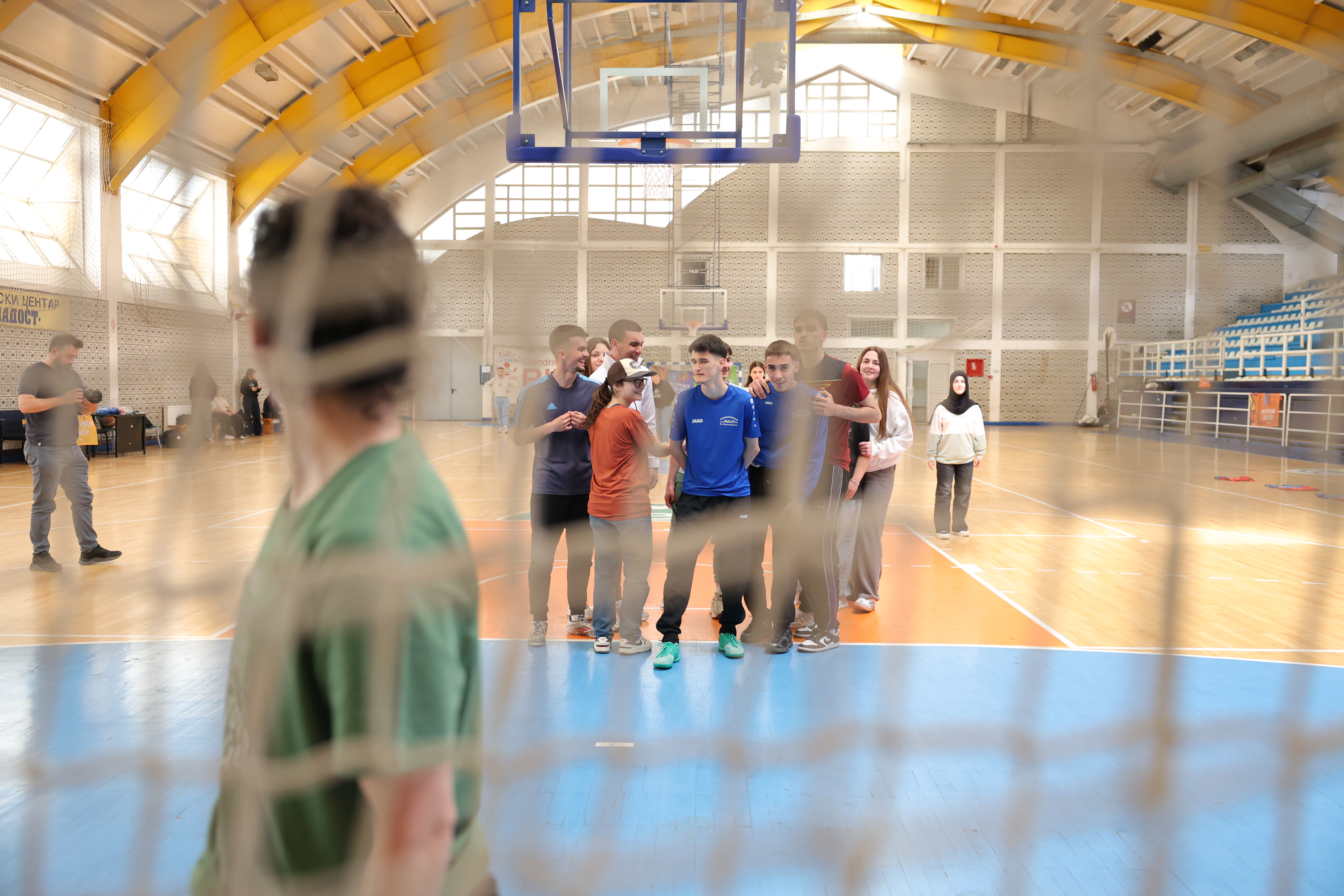
Photo: Dragan Spasov
How easy is it to recognize injustice from the sidelines, and how does our perspective change when we find ourselves in a different role? What does it mean to rely on someone, accept support and offer it to others? And how do we learn to respond when we recognize violence, discrimination or exclusion?
These questions were at the heart of a two-day workshop held in Bujanovac in April 2026, bringing together 29 young people from different communities. Through discussions, interactive exercises, team activities, and joint planning of sporting events, participants explored how trust and solidarity are built, the importance of understanding different experiences, recognizing violence, and being prepared to respond to injustice.
The workshop was part of the project “Strong alone, unstoppable together - sport for social justice”, implemented by NGO Atina with support from the Swedish Postcode Lottery Foundation.
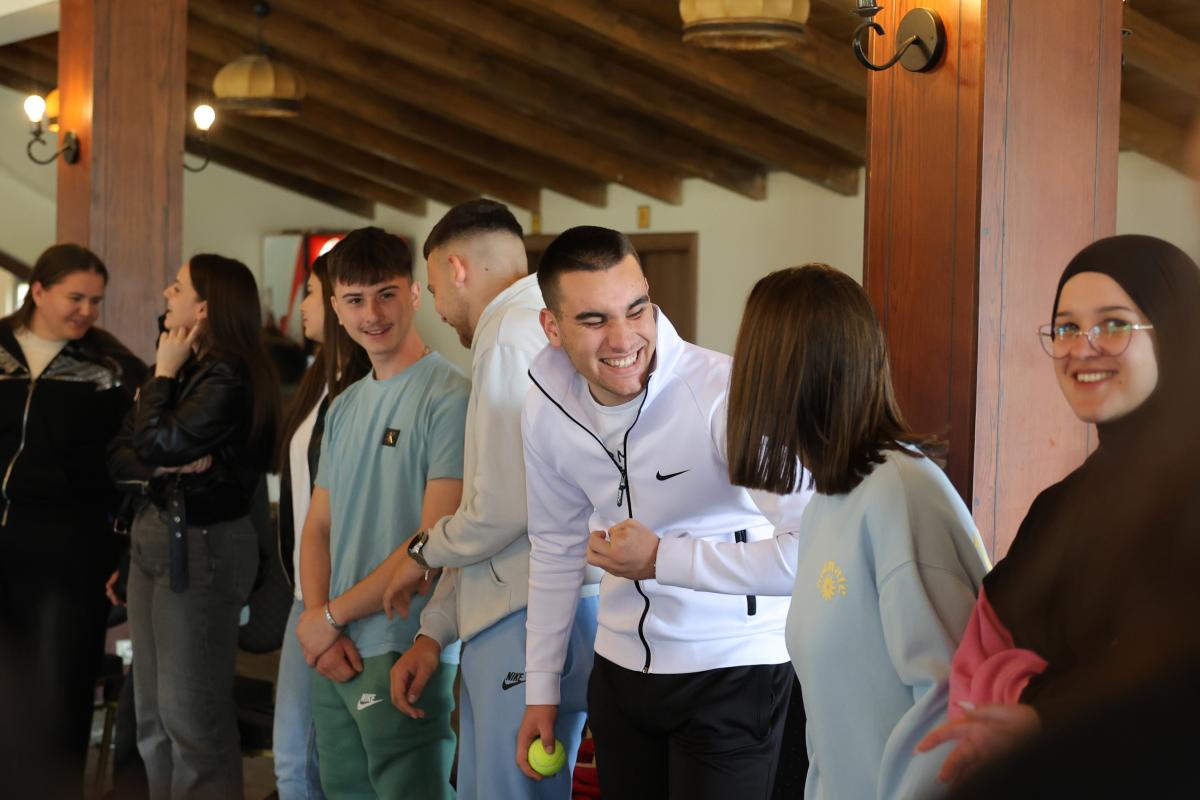
Photo: Dragan Spasov
Understanding violence takes more than learning definitions
Violence, discrimination and exclusion are not phenomena that exist only in legislation, school textbooks or news reports. They also show up in everyday relationships: in how we speak about one another, in the stereotypes we accept without questioning, in whose opinions we value, who gets the chance to participate, and who is left on the sidelines.
For young people, especially as they develop their identities, relationships, and sense of belonging, the chance to discuss these issues openly and without fear of judgment is especially important.
That is why the first part of the workshop was not designed as a traditional lecture. Through introductory activities, exchanges of experiences and interactive exercises, participants discussed discrimination, racism, gender-based violence and human trafficking, connecting these issues to situations they might recognize in their own surroundings.
A key part of the discussion focused on stereotypes and prejudice, but also on responsibility: what do we do when we recognize someone is being treated unfairly?
Recognizing violence is an important first step, but simply knowing that violence exists is not enough. We also need to understand how it develops, why it is so often normalized, why people experiencing violence may find it difficult to seek support, and what role peers, schools and local communities can play in preventing it.
This is why Atina's approach to prevention doesn't start with the assumption that young people simply need information. Instead, it builds on their experiences, questions, and ability to think critically about the world they live in.
What happens when we take on a different role on the pitch?
After the discussions and interactive exercises, participants moved onto the football pitch, but with one important challenge: roles in the game had been assigned in advance, so not everyone could play in their usual position.
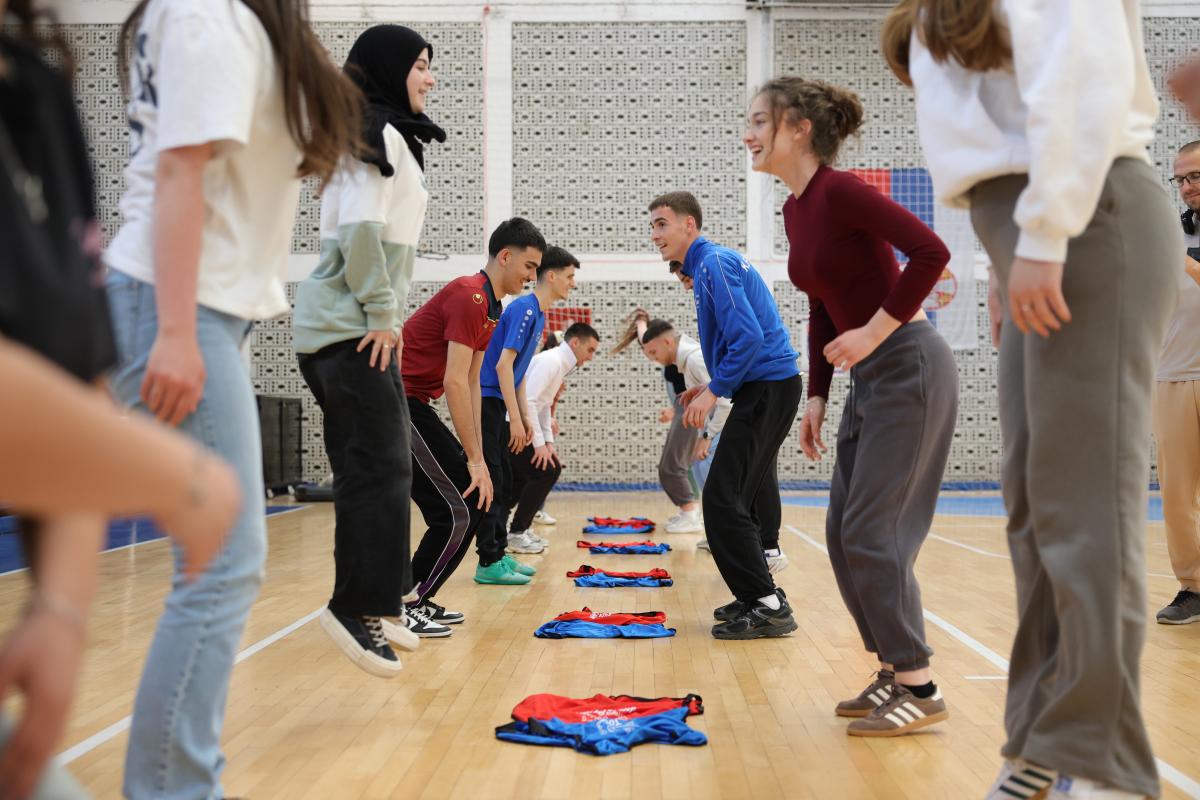
Photo: Dragan Spasov
This seemingly simple change created an opportunity to experience teamwork from a different perspective.
When we find ourselves in an unfamiliar role, we have to rely on others, ask for support, adapt, and accept that we cannot do everything on our own. At the same time, we learn how important it is to support others facing similar situations.
Experiences like these can encourage young people to reflect on relationships beyond the football pitch. In everyday life, we do not all have the same opportunities, starting positions, support networks or access to resources. Some people find it easier to navigate certain environments, while others face barriers that the rest of the group may not even notice.
Equality, therefore, does not mean we all have to be the same or start from the same position. It means recognizing different circumstances and creating conditions in which everyone has the opportunity to participate.
“The best feeling is knowing that your team has your back,” said one workshop participant.
Her words speak to something that goes far beyond football. Trust is built not only through shared successes, but also through the reassurance that we will not be left alone when we make mistakes, struggle, or need support.
These relationships are also essential for preventing violence: young people need to know someone they can turn to, that they can speak openly about their concerns, and that support doesn't depend on how successful, popular, or accepted they are within a group.
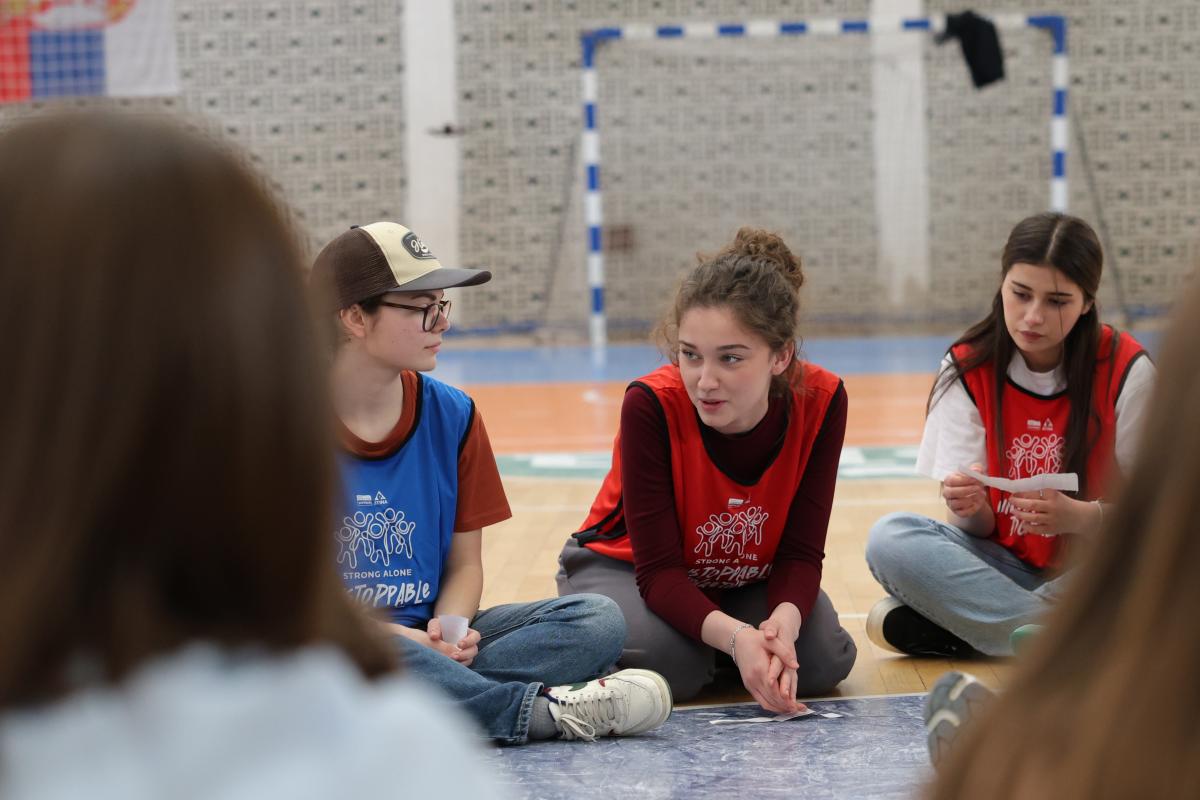
Photo: Dragan Spasov
From participants to organizers: young people take the initiative
On the second day of the workshop, the focus shifted from discussions and shared activities to planning a concrete initiative.
Working together, the young people developed plans for a sports tournament, considered the organizational steps involved, divided responsibilities, and discussed how to turn their ideas into an actual event.
This part of the workshop is particularly important to the approach underpinning the project. Young people are not there simply to participate in activities that adults have prepared in advance. They should have opportunities to propose ideas, make decisions, organize activities and take responsibility for initiatives they consider important.
Planning a joint event involves much more than creating a schedule or dividing tasks. It requires listening to different proposals, negotiating, making collective decisions, resolving disagreements and ensuring that everyone who wants to participate has a place.
These are also active citizenship skills. When young people can organize a sporting event together, they can develop the same abilities needed to initiate other activities in their schools or local communities.
**Meaningful youth participation does not begin when we invite young people to attend an activity. It begins when their ideas can genuinely influence what happens.**
Why is it important to create spaces like these in Bujanovac?
Bujanovac is a community characterized by ethnic, cultural and linguistic diversity. For this very reason, creating spaces where young people from different communities can meet, cooperate and make decisions together is particularly important.
Diversity is not, in itself, an obstacle to solidarity or a sense of community. However, for people from different backgrounds to get to know one another and build mutual trust, they need spaces where they feel equal, accepted, and free to express their opinions.
Sports activities and non-formal education can play an important role in this process, particularly when combined with discussions about human rights, gender equality, non-violence and social responsibility.
For Atina, working with young people to prevent violence and human trafficking involves precisely this kind of approach. Prevention is not simply about warning people of potential dangers. It also involves strengthening mutual trust, understanding power relations, recognizing discrimination, ensuring access to support, and creating opportunities for young people to actively shape their communities.
The two-day workshop in Bujanovac was one step in that process
It showed how discussions about serious social issues can connect to experiences that are familiar and meaningful to young people, and how playing together can become an opportunity to reflect on our responsibilities to one another.
Learning to be a good team on the pitch isn't enough. What also matters is the kind of community we build when the match is over.
The workshop in Bujanovac was organized as part of the project “Strong alone, unstoppable together - sport for social justice”, implemented by NGO Atina with the support of the Swedish Postcode Lottery Foundation.




 FACEBOOK
 TWITTER
 YOUTUBE